The American bail system started as a pragmatic device, not a political lightning arrester. Regional constables, colonial magistrates, and taking a trip defendants needed a method to manage pretrial liberty without obstructing jails or losing defendants that had every reward to drift out of town. Bond, at its core, is an assurance backed by cash or home that an individual will appear for court. Bail bonds are the personal market version of that pledge, where a certified bail bondsman assures the court a defendant's look for a charge. That portable noises straightforward. Its history, with waves of reform, economic incentives, and constitutional boundary lines, is anything but.
English roots and American adaptations
American bond regulation acquired its bones from English method. Medieval constables could detain or launch accused people, in some cases extracting guaranties from neighbors happy to vouch for them. Over time, Parliament and the typical legislation reined in abuses. The 1275 Law of Westminster mapped out classifications of bailable and non-bailable offenses. The 1689 English Bill of Legal rights restricted too much bail, engraving the concept that cash ought to not be made use of to squash liberty prior to trial.
When nests transplanted these ideas, they adapted them to a thinly staffed frontier. Courts satisfied regularly, transport was slow-moving, and jails were scarce and unsanitary. Bail was a practical requirement. Very early American statutes preferred wide bailability and judicial discernment. The expression "extreme bond will not be needed" crossed the Atlantic and landed in the Eighth Modification, an assurance patched to a Constitution questionable of unattended power. That clause does not produce a right to bail in every instance, however it limits just how cash can be made use of to cage people before regret is proven.
By the 19th century, an unique American attribute arised: business surety. Instead of depending entirely on household or personal recognizances, accuseds can turn to a bail bondsman. The bail bondsman, certified by the state, would certainly pledge the full bail amount to the court and charge the offender a nonrefundable charge, commonly 10 percent, to think the threat. That cost was the cost of pretrial flexibility for those without money or collateral to post bond directly.
The birth of the bail bonds industry
Commercial guaranty entered the criminal courts in the late 1800s and early 1900s, accelerated by urbanization, flexibility, and professionalization. Courts demanded trusted guarantors. Bondsmen learned to assess flight threat, collect personal data, and release sensible tools like tips and check-ins long before those tactics had academic labels. Some firms operated with self-control, counted on collateral, and created online reputations with judges and staffs. Others reduced edges or published bonds for clients who were not likely to appear, after that hunted them strongly when they missed court.
That hunting element, the fugitive recovery service, entered into the social textile, in some cases glamorized and frequently misconstrued. Bounty searching was never a free-for-all. Its legality hinges on agreement regulation and state licensing programs. An offender who authorizes a bonding agreement normally consents to particular apprehension powers by the bondsman or a hired representative if the accused fails to appear. States differ in their regulations, and professional bail bondsmans comply with those guidelines carefully, or they locate themselves locked out of court houses by courts who value reliability over bravado.
By the mid-20th century, the bail bonds market had a recognizable shape. Bondsmen preserved stores near court houses, marketed in phone books, and cultivated relationships with defense attorney. Charges clustered at 10 percent, often greater for risky cases. Business design thrived in territories where courts set monetary bond as the default. It likewise seeded the core dispute that still specifies arguments today. Should a person's flexibility turn on their access to cash? If fees are nonrefundable also when situations are rejected, is the system drawing out wide range from people presumed innocent?
Constitutional guardrails and a very early reform wave
The Supreme Court has attracted the boundary lines with restriction. In Heap v. Boyle (1951 ), the Court stressed that bail established higher than what is sensibly necessary to make certain appearance breaks the Eighth Change. In Carlson v. Landon (1952 ), the Court held that the Constitution does not ensure bond for all offenses or in every context. The Court's a lot of essential modern-day judgment, United States v. Salerno (1987 ), promoted the Bond Reform Act of 1984, allowing precautionary apprehension in government instances when clear and convincing proof revealed an offender postured a risk to the community. Salerno affirmed that public safety and security can validate apprehension without going against the Eighth Amendment, as long as procedures were robust.
Reform started earlier at the federal degree. The 1966 Federal Bond Reform Act prioritized release on recognizance and nonfinancial conditions, reflecting research study that a lot of defendants returned to court without a monetary stake. The pendulum swung back in 1984, when Congress included public safety and security to the calculus and produced a much more formal pretrial solutions apparatus. In practice, federal courts shifted far from routine cash money bail. Many defendants were released under supervision, some were restrained after adversarial hearings, and cash money bond ended up being rare in federal cases.
States charted their own courses. Some mirrored government reforms, investing in pretrial solutions units that assess danger, recommend conditions, and supply reminders. Others continued to lean greatly on monetary bond and the exclusive bond market. The array is vast. A person jailed for the very same offense might encounter a no-money launch in one area and a $25,000 bond in one more, depending on neighborhood rules, society, and sources. That variation fuels both plan trial and error and public frustration.
How a bail bond works in practice
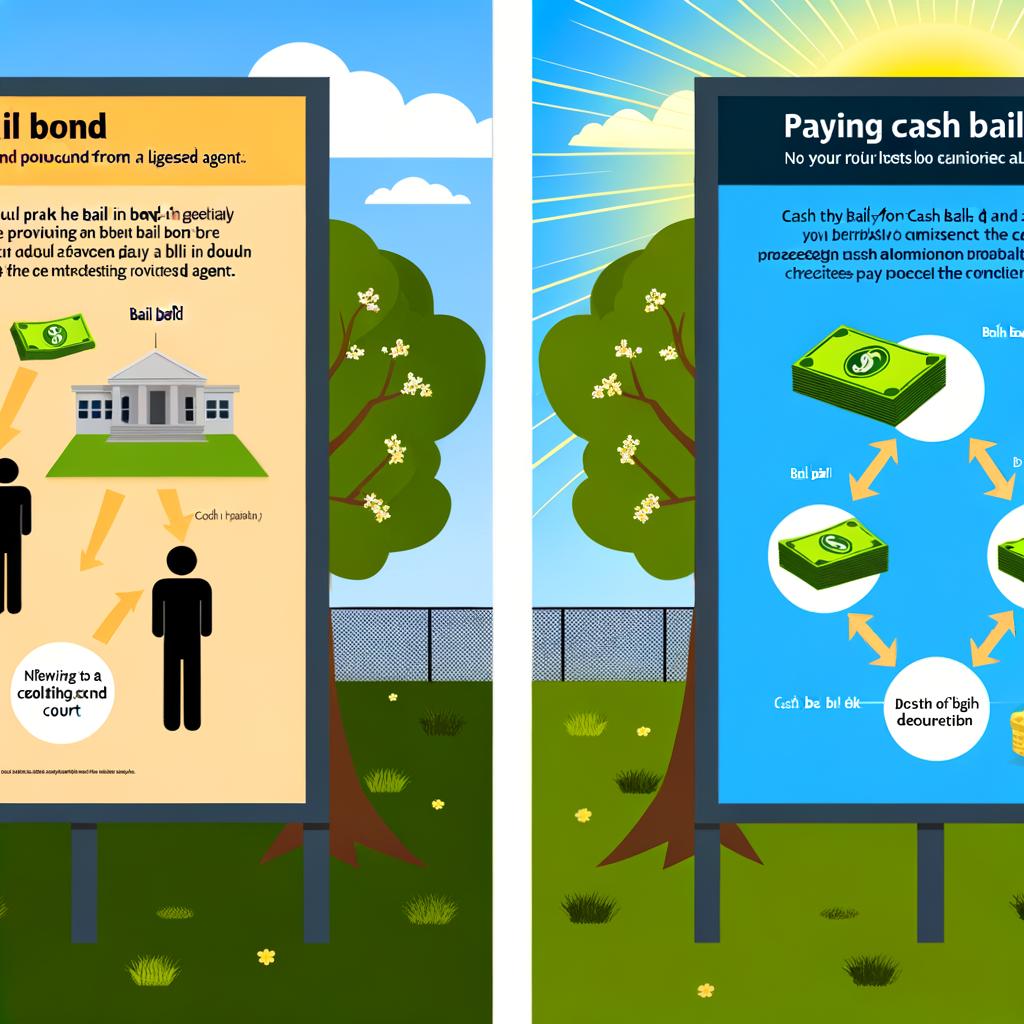
Anyone that has actually rested with a household in a bail workplace understands the math and feeling that clash at that counter. Intend a court establishes bail at $50,000. Couple of households can create that quantity in cash or home within hours. If they publish money bail straight, the court holds it till the instance ends, then returns it minus costs and fines if the person looked like needed. If the family members transforms to a bondsman, they pay a charge, usually 10 percent, in some cases with collateral. That charge is nonrefundable. The bail bondsman submits a bond with the court and presumes the responsibility to pay the total if the accused fails to appear and the bond is forfeited.
Risk management specifies the bondsman's craft. Examine the defendant's connections, work, prior looks, substance use, and traveling patterns. Need cosigners. Get contact information for relatives and companies. Arrange check-ins prior to court days. Use text reminders and ride plans. If a person misses out on court, act promptly to repair it. Several failings to show up are not escapes however confusion regarding dates, transportation problems, or anxiety. A punctual call to the staff and a volunteer surrender can treat the default, protecting the bond and the defendant's freedom.
From the court's viewpoint, a bond is a conditional guarantee. If the promise breaks, judges have tools. They can provide a bench warrant, routine a hearing, and determine whether to forfeit the bond. They can give debt for partial performance if the bondsman returns the accused promptly. Neighborhood practice issues. Some jurisdictions are stringent, others a lot more flexible if the underlying crime is minor.
Economics, motivations, and side cases
The bail bonds market operates on motivations. Keep forfeits low, treat court personnel well, and maintain clients appearing. That alignment can generate reputable outcomes. The friction shows up in 3 places.
First, the nonrefundable fee is a blunt tool. An individual that is acquitted or whose charges are dismissed has actually still paid the bail bondsman charge. Movie critics call that unreasonable. Bondsmen respond that the charge covers the threat, the hours, and the monetary exposure that feature every bond, also when things go smoothly.
Second, collateral can come to be a wedge within family members. Parents or relatives usually promise cars and trucks or actions to protect a bond. If the defendant misses out on court and can not be produced, the bail bondsman can relocate against collateral. Numerous bondsmen avoid foreclosure unless they have no choice, since neighborhood track record matters. Still, the danger is genuine, and it alters household dynamics.
Third, low-level cases can develop outsized problems. A $5,000 bond on a shoplifting instance equates right into a $500 cost, which could amount to a week's earnings. In some regions, courts and prosecutors will agree to release on recognizance after a day or two, providing the preliminary bond an unnecessary cost. In others, the fee is the price for going home that evening. The rhythms vary and so does the general public's resistance for those trade-offs.
The modern reform period and the data turn
Over the last decade, reform accelerated. Territories started to measure pretrial appearance rates and new criminal activity, as opposed to rely on assumptions. The numbers tended to reveal that easy interventions like pointers by text or phone enhanced look, and that lots of people returned to court without a monetary risk. New Jacket's 2017 overhaul almost eliminated cash money bail in favor of danger evaluations and supervised launch. The very early results revealed sustained court look rates and reduced pretrial jail populations, with later modifications to resolve terrible criminal offense concerns.
California tried a statewide shift in 2018 with Senate Expense 10, changing cash bail with a risk-based system. Citizens denied the action in 2020, reflecting skepticism of mathematical devices and the convenience of recognized systems. Meanwhile, the California High court regulationed in In re Humphrey that courts have to consider an offender's ability to pay and make use of nonfinancial problems whenever possible. The outcome is an anxious hybrid. Bail remains in operation, yet courts are under pressure to adjust quantities and think about alternatives.
Illinois moved furthest, implementing the Pretrial Fairness Act in 2023 and finishing cash money bond statewide. Judges currently decide launch or apprehension based upon security and flight threat, after adversarial hearings. Early records reveal reductions in pretrial prison populations without a spike in failures to show up, though information collection continues to be unpleasant and partial spin quickens after every prominent incident.
New York revised bail laws in 2019, sharply restricting cash money bond for many offenses and nonviolent felonies. 2 rounds of amendments complied with to offer courts more discretion. Through the sound, look prices have actually remained high. The discussion often merges rearrests and pretrial launch, however deeper evaluation typically reveals that a little portion of defendants drives public security worries, no matter the bail regime.
The business bond industry has combated many of these reforms, in courts and at the tally box, saying that personal sureties outperform government-supervised release at obtaining people back to court. Independent researches reveal combined outcomes that depend upon neighborhood technique. In position with strong pretrial solutions, durable pointer systems, and clear effects for missed court, nonfinancial release does well. In places without those supports, bondsmen fill a void, especially after-hours and on weekends, when courts and pretrial team are scarce.
The constitutional core still matters
Despite experiments, 2 principles hold steady. Bond exists to ensure appearance and, in many jurisdictions, to secure public security. It can not be used to punish. Too much bond breaks the Eighth Modification when it surpasses what is reasonably necessary to achieve those objectives. Ability to pay is an important part of that calculus. Courts significantly call for on-the-record findings when they establish bail that a person can not afford. Those requirements are not simple formalities. They are the constitutional spine that maintains pretrial apprehension from becoming a device of poverty-based incarceration.
Salerno continues to be the anchor for precautionary detention in the federal system and a guidepost for states. If the government looks for to detain a person due to threat or high trip risk, it ought to verify that instance with proof in a hearing, not by establishing bond so high that release is impossible. That distinction sounds technological, yet it compels clarity. Detention is a significant action that ought to be transparent, not buried in numbers.
Technology, sms message, and less beauty than TV
A peaceful transformation in pretrial management has nothing to do with court room drama and everything to do with phone numbers. Courts that send basic reminders see fewer missed appearances. Some go further, offering maps, transit paths, and an option to request a new date before a bench warrant issues. These devices set you back pennies contrasted to prison beds, and they deal with defendants as people with messy lives, not as trip risks by default.
Electronic surveillance is extra complex. Ankle arm bands can reassure a court and allow launch when apprehension would certainly or else be purchased. They additionally impose daily fees in many jurisdictions, turning launch into a metered service. Surveillance can be a lifesaver in a high-risk instance or an unneeded problem in a low-level one. On this surface, details issue. Duration, fee waivers, clear removal criteria, and punctual evaluation of incorrect signals fix a limit in between accountable guidance and corrective surveillance.
What bail bondsmans do beyond the bond
An experienced bail bondsman acts as a translator in between systems. A mother calls at twelve o'clock at night from a holding cell phone line. A first accusation is arranged for the early morning. The bail bondsman clarifies the timeline, the likely bond variety based upon local standards, and whether a cosigner will certainly be required. After release, the bondsman nudges customers to update addresses, helps them review their notices, and tracks continuances. When individuals deal with warrants for missed dates, a phone call to the bail bondsman frequently comes prior to a call to an attorney. That human link is part business, part social work, and component danger management.
Some companies run reference networks for treatment and real estate. A client with an opioid usage condition is less most likely to make it to court if detox is not attended to. When bondsmen cultivate these connections, they lower their very own danger while boosting results. There are limits. A bail firm is not a social service. Time is cash, and uncompensated labor can not extend forever. Still, the very best drivers develop enough pillow to aid support those that will certainly react to help.
Where the bail bonds sector is shrinking, and where it is not
The sector has actually lost ground in jurisdictions that decreased reliance on money bond. New Jersey's overhaul diminished the marketplace considerably. Washington, D.C., which depends on pretrial services and does not make use of industrial bond, has actually not had a bonds industry for decades. Illinois' new framework removed it overnight. The golden state's jumble restricts growth, especially in regions that widened pretrial release. Yet in large swaths of the country, specifically in the South and parts of the Midwest, commercial surety continues to be typical. Area prisons, county judges, and region clerks run systems that are locally meaningful, also if they encounter national reform narratives.
When criminal activity spikes, the pendulum actions. Political leaders under stress require "stricter bail." That expression usually implies even more detention or greater bond amounts, which usually revives demand for bonds. When jail congestion or budget strain comes to be unsustainable, courts expand citations, desk appearance tickets, and nonfinancial release, which dispirits the market. The sector's size is a measure of plan selections, not a repaired constant.
Myths that continue and realities that help
Here are 3 explanations that often tend to improve discussions concerning Bail Bonds:
- Bail is not a fine. A great punishes after conviction. Bond is a pretrial device, and its financial parts are not expected to penalize. When bond operates as penalty, courts are bound to review it. Bond fees are not refunded. Paying a bail bondsman is like purchasing insurance policy. If every little thing goes well, you still paid for the danger transfer and the solution. If you can upload cash bond straight, and you are certain you will certainly not miss out on court, you might favor to avoid the fee. Most failings to show up are not gets away. They are missed out on buses, childcare situations, or concern. Equipments that permit quick rescheduling and send out pointers have a tendency to reveal fewer warrants and much better conformity without raising risk.
The limits of forecast and the value of judgment
Risk evaluation devices have promise and real restrictions. They can bring uniformity and decrease naked wealth-based decisions. They can also inscribe historic predispositions if fed manipulated data. A device that weighs previous apprehensions will penalize people from neighborhoods with heavy cops existence even when billing patterns moved. Fixed variables do not capture unexpected favorable modifications, like a brand-new job or steady housing, and they do not see a downward spiral prior to it crests. Good courts make use of tools as one input, not a substitute for human judgment. Good defense lawyers bring context that numbers miss.
Bondsmen establish their very own heuristics. An accused that responds to the phone on the first ring and uses to bring pay stubs to the workplace often tends to be trustworthy. A person with 3 various contact number in 2 weeks merits warn. These monitorings are not scientific, https://johnathanguuw995.tearosediner.net/exactly-how-to-handle-bail-for-numerous-charges yet they are not random. Lived experience completes the voids in between court schedules and plan reports.
Where reform can focus without losing the plot
Sustained progression originates from practical steps that value both liberty and safety. Courts need to establish bail only when necessary. When they do, capability to pay need to be front and facility. If nonfinancial conditions can reasonably ensure appearance or security, utilize them. Invest in reminders, transport assistance, and fast warrant recall for low-risk failures to show up. When preventive detention is sought, need evidence and a hearing, and keep apprehension directly tailored to the situations that absolutely require it.
Commercial surety still has a duty in numerous territories. Where it stays, regulators ought to police misuses without suffocating reputable procedures. Clear forfeit treatments, timely notice, and reasonable debt when an offender is returned go a long means. Transparency regarding fees and security safeguards family members from shocks. Cooperation with pretrial services can turn a purely economic arrangement right into a safeguard that decreases disorder and boosts compliance.
The long arc, not a straight line
The story of bail bonds in the USA began with English guarantees against excess and evolved with American improvisation. For generations, the bail bonds sector offered a bridge in between crowded prisons and busy courts, generating income from danger in such a way that made good sense to regional stars. Reformers revealed the cost that approach troubled poor defendants and examined whether cash was the ideal lever to pull. Policymakers answered with laws, algorithms, and solutions that sometimes enhanced outcomes and often stumbled.
The terrain in advance will keep shifting. Economic cycles, crime fads, court stockpiles, and innovation will certainly continue to improve method. What ought to not change is the constitutional humbleness that pretrial liberty demands. A person jailed is still assumed innocent. The goal is not to assure perfection, but to manage risk with fairness and sincerity. When systems deal with people like participants of a community rather than issues to be refined, appearance prices improve, public security gains a silent ally, and the old quarrel over bond looks less like belief and more like management.
Bail bonds rest inside that monitoring difficulty. They are neither hero neither scourge. They are a tool that expanded in the gaps of American justice, valuable in some areas, mistreated in others, and constantly shaped by local options. Understanding exactly how they arised, why they persisted, and where they fit today aids us steer the following round of changes with fewer slogans and more facts.
ABBA Bail Bonds 900 Avila St STE 101 Los Angeles, CA 90012 (213) 296-0901 https://abbabailbonds.com